1
A multipack is not always a bargain
A pack of three can cost more per kilo than three units bought separately. The word “pack” is often enough to suggest a discount where none exists. Only dividing by the quantity settles it.
The label says promotion, the arithmetic says otherwise. Multipacks, large formats and bundled offers are built so that the division never gets done. Here are the three most common mechanics, and what defeats them.
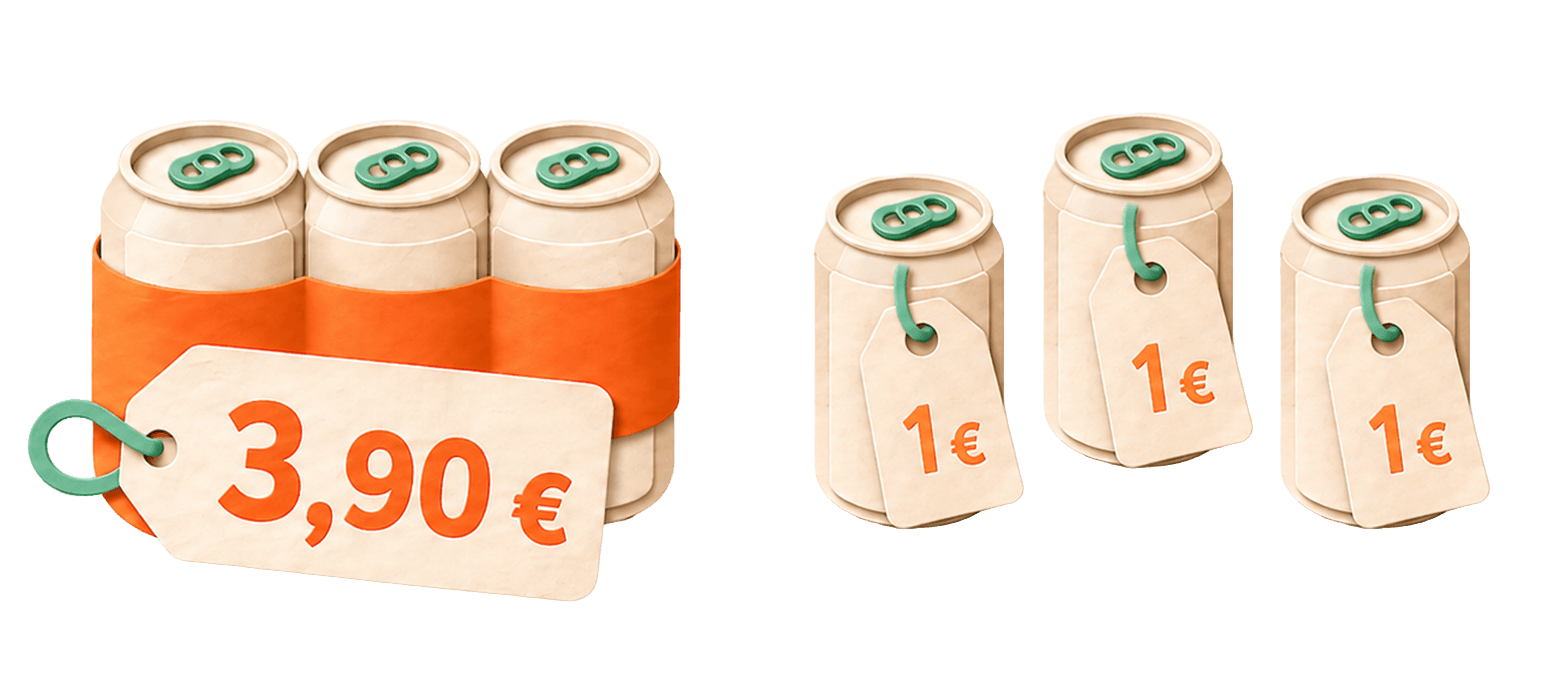
A pack of three can cost more per kilo than three units bought separately. The word “pack” is often enough to suggest a discount where none exists. Only dividing by the quantity settles it.
Large formats are assumed to be cheaper. In practice they sometimes cost more per kilo than the standard size of the same product. Bigger means cheaper is a habit, not a guarantee.
Price per kilo, per litre or per unit is the only common ground between different formats, brands and retailers. It has been mandatory in France since 1997, but printed so small, in units that vary so much, that it stays almost unreadable on the shelf.
Scan a product: Aukilo compares its formats, its multipacks and the shops around you, then tells you which one to buy.